PEACE+ – Participation Erasmus Alumni for Civic Engagement – is a Long-Term Cooperation Activity coordinated by the Italian Erasmus+ National Agency INDIRE.
Civic engagement regards the commitment of an individual with the ‘interests, goals, concerns and common good of a specific community’. It has to do with civic knowledge and sensibility/feelings of solidarity, while civic participation relates to activities that aim at increasing social inclusion and the enhancement of solidarity between citizens and (ethnic and social) groups in society.
“Active citizenship in Europe”, Cristiano Bee (2017)
The initiative promotes collaboration among Erasmus+ Alumni networks, Ambassadors and Role Models across all sectors of the Programme (Higher Education, School education, Adult education, Training).
By connecting experiences developed in different countries and local contexts, PEACE+ aims to foster a wider and more coordinated impact across the European Union and within its communities.
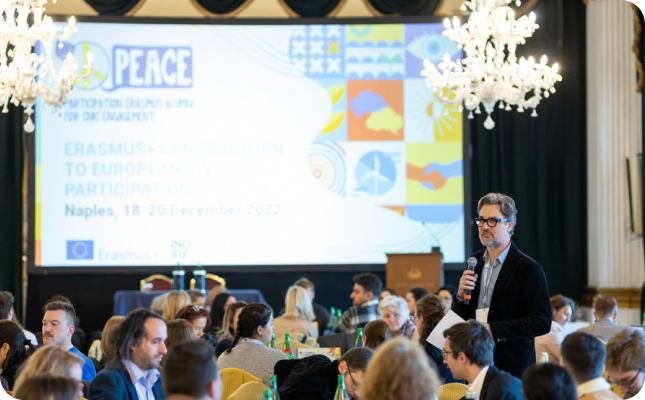
PEACE+ represents the continuation and expansion of the original PEACE project.
Building on the experience, partnerships and good practices developed during the first phase (2022-2025), the project enters a new stage that broadens the network of participating Erasmus+ National Agencies and strengthens cooperation among them.
This new phase will continue until 2027 and aims to amplify the project’s reach across Europe.
Through stronger coordination between national and local initiatives, PEACE+ seeks to connect experiences, share knowledge and highlight practices that encourage civic engagement and democratic participation among young people.
PEACE+ is structured around four common lines of action shared by all participating National Agencies
Mapping, developing and connecting local Erasmus+ actors, including Alumni, Ambassadors and Role Models, in order to strengthen collaboration across countries and territories
Increasing communication, information and dissemination activities through media and social platforms, highlighting both joint initiatives organised by the partner agencies and relevant projects developed at national or local level
Developing and implementing educational modules and learning resources focused on European values, civic engagement and European citizenship
Supporting research activities on civic engagement and related topics through the involvement of university researchers and academic expertise
The primary objective of PEACE+ is to strengthen young people’s understanding of European values and increase awareness of the benefits of European Union membership for citizens.
The project also promotes civic engagement and democratic participation among young people and students, recognising these as essential elements for the future of both Erasmus+ and the European Union.
Increasing awareness of Erasmus+ opportunities and encouraging the participation of new beneficiaries
Highlighting how Erasmus+ mobility experiences contribute to civic engagement and to the development of a shared European identity
Strengthening awareness of European values and encouraging young people to take an active role in democratic life
Consolidating the connections between Erasmus+ actors and their local communities
Fostering cooperation among Erasmus+ Alumni and Ambassadors networks across Europe
Through its activities, PEACE+ seeks to reach young people who may feel uncertain or distant from European institutions and encourage them to take an active role in the democratic life of the Union.
The project also highlights concrete examples of good practices emerging from local communities, showing how participation can generate positive outcomes for citizens and society.